When most people talk casually about dogs, they tend to talk about breeds. Poodles. Beagles. Labrador Retrievers. Anything that doesn’t fit neatly in breed? Well, those must be mutts…right?
In reality, dog populations are more nuanced and include:
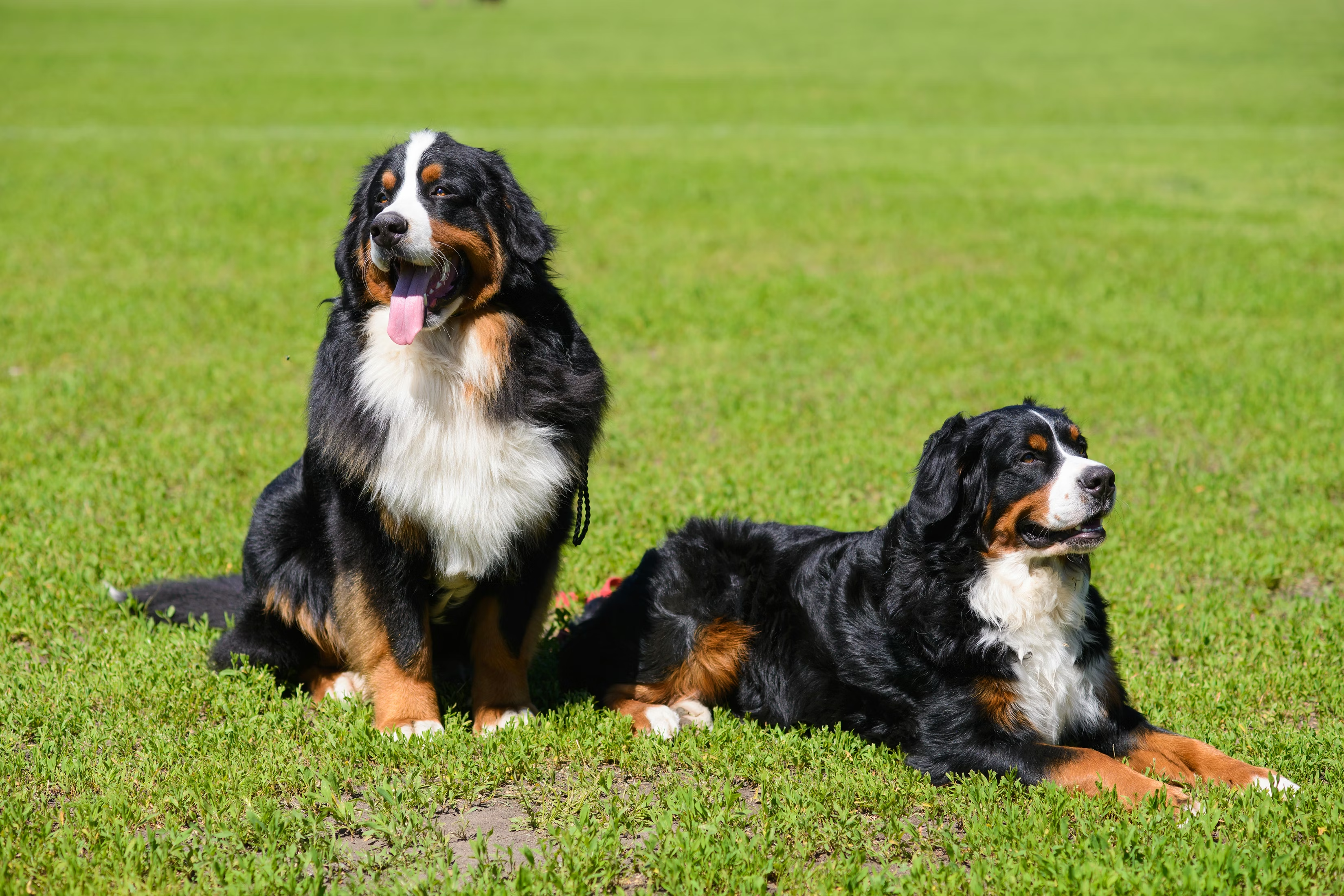
- Purebred dogs. These dogs, which make up a small percentage of the overall population, have a documented pedigree and were bred to meet certain standards for appearance, temperament, and, in some cases, performance. You can learn about many of them in our breed library.
- Designer dogs. Also known as cross-breeds, designer dogs are the result of intentionally crossing purebred dogs. Examples include the Labradoodle or Pomsky. These mixes are not yet recognized by major kennel clubs.
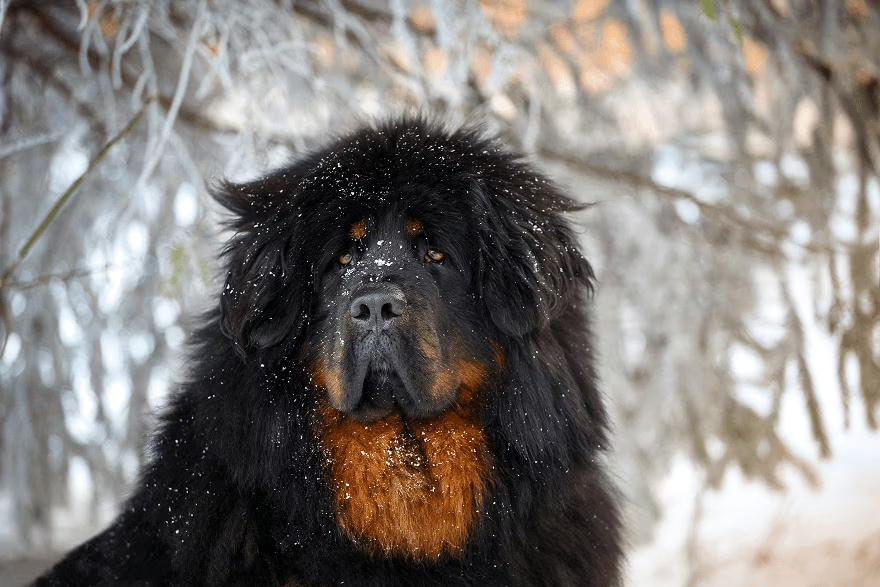
- Landraces. Landraces and ancestral village dogs developed over long periods of time by varying degrees of human management and environmental pressure . Himalayan Mountain Dogs are one example of a landrace.
- Mixed-breed dogs. Mixed breeds result from mating dogs that are not the same breed or landrace. These often unplanned pairings result in dogs with traits from a diverse range of ancestors.
Understanding this spectrum, and how it came to be, gives us a more complete picture of our canine friends—and what their DNA is really telling us.
Natural environment vs human influence
Dog populations can be shaped by the environment dogs live in and the role humans play in their breeding. Think of these factors not as an “either/or”, but as a sliding scale.
At one end of the scale is environmental filtering. Here, local conditions have significant influence over the population. Dogs that are better adapted to their local conditions are more likely to survive and reproduce.
At the other end, humans play a larger role in shaping future generations. In this instance, people selectively breed dogs for specific traits—whether that’s working ability, temperament, or appearance.
Most dogs fall somewhere in between.
The environmental end: Dogs shaped by their surroundings
Dogs on this part of the spectrum live alongside people, but their breeding isn’t actively managed. Instead, semi-feral populations are shaped largely by the environments they live in.
Factors influencing these dogs include:
- Climate and weather patterns
- Access to food, which is often tied to proximity to humans
- Exposure to disease and parasites
- Interactions with other dogs and animals
Over generations, these factors naturally favor traits that help dogs succeed in their specific setting. For example, “Indie” dogs in India are often well adapted to hot climates and urban environments, while some African village dog populations show genetic patterns linked to local disease resistance.
Because there are fewer constraints on breeding, their genetic diversity remains relatively high. Instead of being shaped toward a specific look, their genetic make-up reflects what works in their environment.
The middle ground: Dogs shaped by purpose
As you move along the spectrum, human involvement becomes more intentional—but still flexible. This is where landraces and traditional working dogs come in.
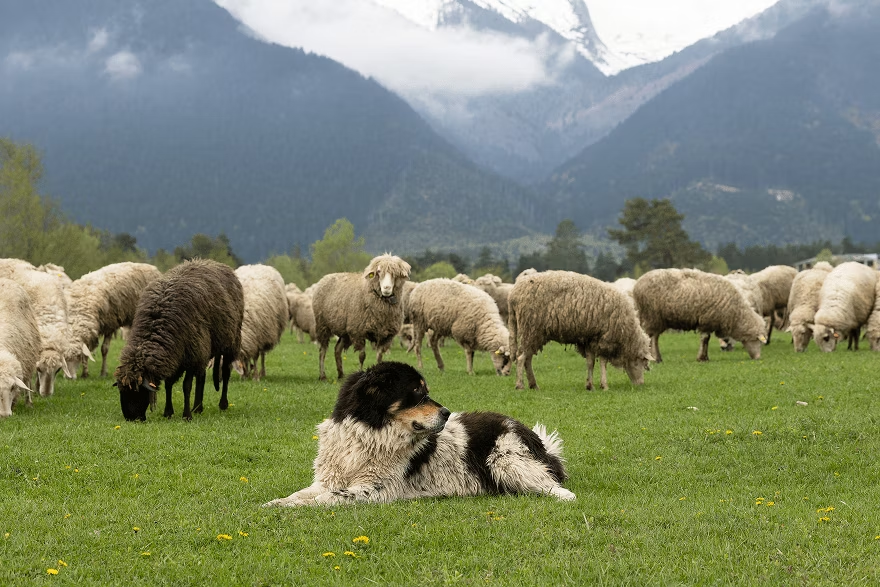
These dogs “fit” their natural environment, but people also began selectively breeding them with a specific purpose in mind, such as guarding livestock, hunting, or helping manage herds. The priority was the ability to perform traditional jobs, not appearance or pedigree.
Livestock guardian dogs in mountainous regions like the Himalayas are a good example. Landrace dogs such as the ancestral Tibetan Mastiff were valued for their ability to protect animals in challenging environments. Over time, traits like independence, size, and resilience became more common—not because of a written standard, but because they were effective. Landrace Tibetan Mastiffs still exist today, although they are distinct from the standardized breed that has become more common.
Similarly, dogs like the Saluki were shaped by the needs of hunters in desert regions, where speed and endurance mattered more than uniform appearance.
In these populations:
- People play an active role in choosing which dogs to keep and breed
- Performance and reliability matter more than looks
This part of the spectrum reflects a balance—where both environment and human preference contribute to shaping the population.
The highly managed end: Dogs shaped by pedigree
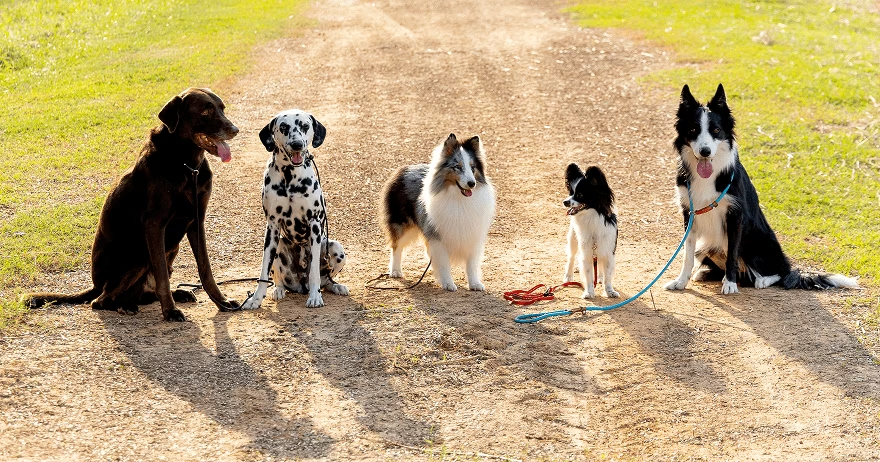
Development of modern purebred dogs took off in the 19th century. Here, human involvement is much more structured. Breeding is typically planned, pedigrees are tracked, and dogs are selected to align with specific breed standards.
Over time, this approach has created the consistency we associate with breeds today.
For example:
- The French Bulldog has been developed with a very recognizable body shape and facial structure
- The Golden Retriever has been refined for a consistent appearance and temperament, especially in show lines
For these dogs, people play a central role in shaping which traits are passed on from one generation to the next. This can lead to very predictable outcomes, but also means that genetic diversity is more limited compared to other populations. When selecting for specific traits, other linked traits, such as those impacting health, can be passed along as well.
Blurring the lines
While the spectrum we’ve discussed is a helpful framework, it doesn’t fully capture the complexity. After all, dog populations don’t stay fixed in one place.
Throughout history, dogs have traveled with humans across continents, along trade routes, and into new environments. As they do, different populations mingle and share their genes. Today, this mixing continues through:
- International travel and relocation
- Adoption and rescue efforts
- Intentional or unplanned crossbreeding
These ongoing factors mean many dogs have ancestry that spans multiple parts of the spectrum. A single dog might reflect:
- Traits shaped by environmental adaptation
- Influences from working or landrace populations
- Contributions from modern breeds
How Wisdom Panel helps decode your dog
Genetic testing offers a way to better understand your one-of-a-kind dog. Wisdom Panel tests analyze your dog’s DNA using the world’s largest reference database, which includes both recognized breeds and broader dog populations. This allows for a more complete and accurate picture of your dog’s ancestry and traits—and a deeper understanding of the pup you love.